
September 2026 | WG Prevention | Interview
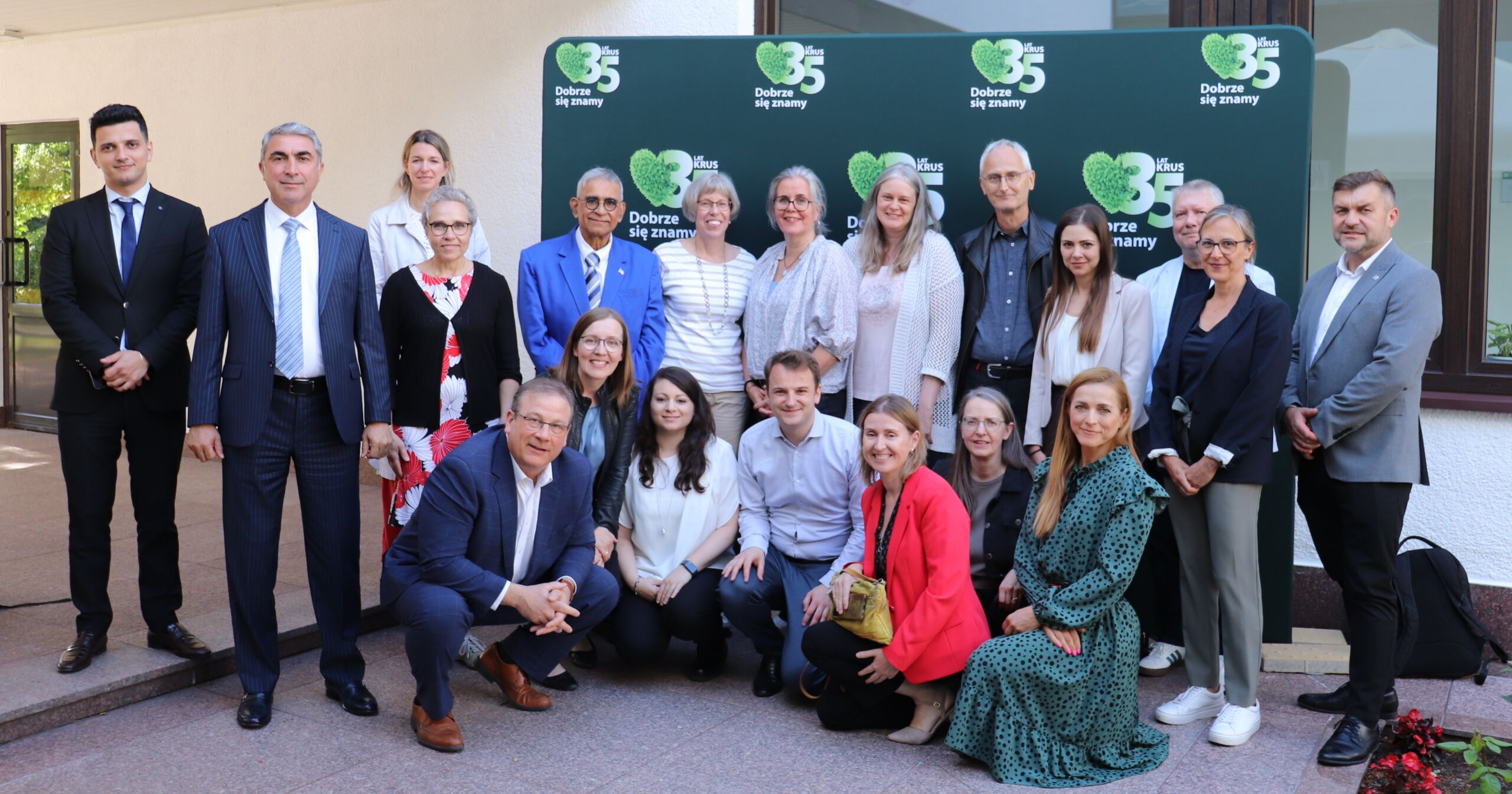
© KRUS
Working Group Prevention of the EFOP
An interview with Paul Pannacci, Chair of the Working Group Communication
1. What were the main topics discussed during the Prevention Working Group meeting in Warsaw?
The meeting covered several important topics, including our exchange platform for best practices, new prevention initiatives from member institutions and recent developments at European and international level.
The main focus was placed on the results of our survey on artificial intelligence and mental health, which had been conducted prior to the meeting. We discussed psychosocial risks, the potential impact of AI on workers’ mental health, and the opportunities and challenges associated with using AI in occupational risk assessment and prevention.
2. Which topic generated the most discussion or interest among the participants, and why?
The results of our survey on artificial intelligence and mental health generated the most discussion. They provided a strong basis for exchanging views on the most relevant psychosocial risk factors in European workplaces, the main challenges in preventing them and possible prevention approaches. There was also considerable interest in AI-related psychosocial risks, the reliability and of AI-supported OHS risk assessment and the role that public accident insurance institutions could play in this field.
3. Were there any new trends, challenges or developments in prevention that particularly stood out during the meeting?
This meeting focused on mental health and AI, while recent meetings have also addressed other developments such as climate change, automation, demographic change, platform and gig work, temporary agency employment, education and training, language barriers, and commuting safety. All these developments bring new challenges for prevention and require accident insurance institutions to adapt their approaches and tools.
4. What key messages or takeaways would you like Forum members who could not attend the meeting to know?
For many years, occupational prevention focused mainly on physical health and accident prevention and of course these areas remain essential. At the same time, it is very positive to see that mental health and psychosocial risks are now also an important part of prevention across Europe. Today, nearly all member institutions have developed tools, campaigns or other initiatives in this area. This shows that prevention is increasingly taking a broader view of workers’ health and well-being.
5. Looking ahead, what are the main priorities for the Prevention Working Group over the next year?
One priority will be to further develop our exchange platform by adding more best practices from member institutions and encouraging exchange between them.
We also want to continue our work on mental health and artificial intelligence, building on the results of the survey. The survey has helped us identify common concerns and priorities, and the next step will be to develop a concrete output from the European Forum that can be useful for our members in their prevention work.
Another priority is to strengthen international cooperation, so that we can better coordinate activities, exchange knowledge and experience, and look for opportunities to work together. ●