

March 2026 | Italy | Climate Change
© Andrey Nikitin | iStock
Managing Extreme Weather: INAIL’s New Integrated Approach for Workplace Safety
Extreme weather conditions in working areas, without adequate preventive and protective measures being taken, can generate risk situations for workers and can determine, due to the shortcomings in coping with environmental forcing, critical issues in the workplace at the level of structures and plants. The regulatory framework on safety in the workplace is evolving in relation to the assessment and management of natural risks, including those related to extreme weather events in an already very vulnerable territory. INAIL is committed to the development of technologies capable of acquiring environmental data, providing forecasts, alerts and emergency management in real time, with the aim of reducing exposure and improving the safety of workers, workplaces, equipment and plants.
More frequent and intense extreme weather events endanger workers and workplaces
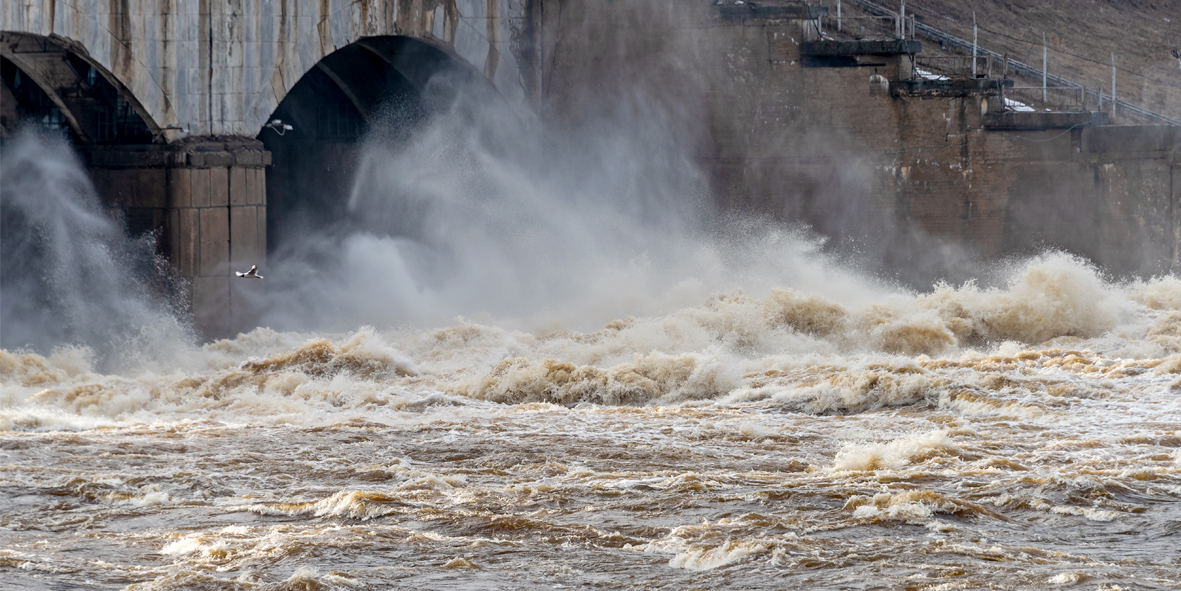
Recent major natural disasters have highlighted the emergence of a new type of risk that manifests itself when the natural and working environments collide. Extreme weather events are occurring with increasing intensity and frequency, providing full evidence of the effects of climate change. Recent years have been characterised by the alternation of periods of extreme drought and periods of above-average rainfall with consequent hydrogeological events (landslides and floods).
The INAIL research sector is committed to the development of integrated solutions able to allow a dynamic assessment and management of the risk associated with extreme weather events and to prevent injuries and consequences on the workplace, equipment and plants.
IT solution to enhance workplace safety: A web-app for real-time risk management
An advantageous solution is represented by a web-based app system that acts as a weather and climate station in the workplace, and that is able to predict and inform workers and employers/managers in a timely manner of the possible temporary risks associated with the occurrence of extreme weather events and provide medium-long term indications for the reduction of these risks in the workplace. This tool aims to provide a forecast of the probability of observing episodes of extreme weather events such as intense rain, tornadoes and linear windstorms a few hours in advance, based on large-scale and/or limited area modelling outputs combined with climatological frequency tables. The company management will be therefore able to implement adequate measures to protect workers and working environments.
This innovative method will improve the current limits of classical meteorological models, which are not able to correctly represent local convective phenomena such as tornadoes and downbursts. As far as lightning strikes are concerned, real-time lightning risk assessments will be developed, refining the procedures currently in use that are based on static estimates referring to average annual data, allowing greater flexibility and personalisation of the indications addressed to workers, thanks to the dynamic updating of some of the input data in relation to the evolution of ceraunical activity.
From the point of view of worker safety and structural safety of work environments, equipment and plants, libraries of vulnerability and structural damage functions will be developed to quantify the probability of observing a specific consequence induced by the different types of environmental stressors predicted by the meteorological model. All these tools will be integrated and harmonized in this web-based app system with an IT architecture capable of using real-time data and, through machine learning algorithms, improving the predictability of events, informing workers and plant managers through a multi-channel alert system, and managing the emergency through the use of worker location technologies, monitoring of work environments, equipment and plant engineering, and coordination of emergency teams.
The dynamic emergency management cycle
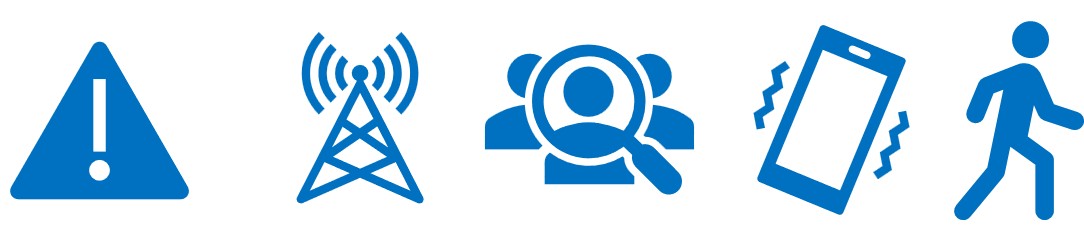
During emergencies the system follows the following steps:
Automatic Alert Receipt (CAP Standard);
Locating people (temporary storage of locations to protect privacy);
Calculation of the optimal evacuation route for the type of emergency;
Sending personalised instructions to mobile systems via (Message Queuing Telemetry Transport);
Therefore, this technology will provide a tool to:
Detect workers: Geolocation system capable of detecting in real time the presence of personnel in areas affected by extreme weather events;
Monitor environmental conditions: Control system via IoT sensors for monitoring environmental conditions such as temperature, humidity, wind speed and air quality, with the possibility of reporting by workers of reports of accidents and dangerous conditions;
Alert with personalised notifications: Early warning system for sending personalised push notifications to each worker in relation to position, task, working environment and potential risks induced by the weather phenomenon, with information for workers/rescuers useful to identify safe evacuation routes and the possibility of reaching the injured to provide medical care;
Analysing data: System of analysis and reprocessing of data collected through dashboards capable of carrying out real-time analysis and processing of trend statistical series;
Analyse vulnerability and risk: Information processing system aimed at defining the vulnerability of workers and the risk of workplaces, equipment and plants and the identification of performance thresholds beyond which to activate specific behavioural protocols and risk reduction measures;
Managing company feedback: Customer feedback system for the improvement of communication strategies, safety procedures and emergency management through the active involvement of workers and company figures responsible for health and safety in the workplace.
Conclusions
The main product of the ongoing research activity will be represented by the prototype of the above-described web-based app system as a decision support tool capable of acting as an intelligent weather and climate station with monitoring, warning and emergency management functions, with a view to increasing the resilience and adaptation of national productive system to extreme weather events.●
Alessandra Marino, Mariano Ciucci and Corrado Delle Site
Italian Workers’ Compensation Authority (INAIL)
www.inail.it
IMPRINT: The European Forum of Insurance against Accident at Work and Occupational Diseases | Working Group Communication | Permanent office of the EUROPEAN FORUM | Maison Européenne de la Protection Sociale | Rue d’Arlon 50 | 1000 Brussels | info@europeanforum.org