

March 2026 | France | Climate change
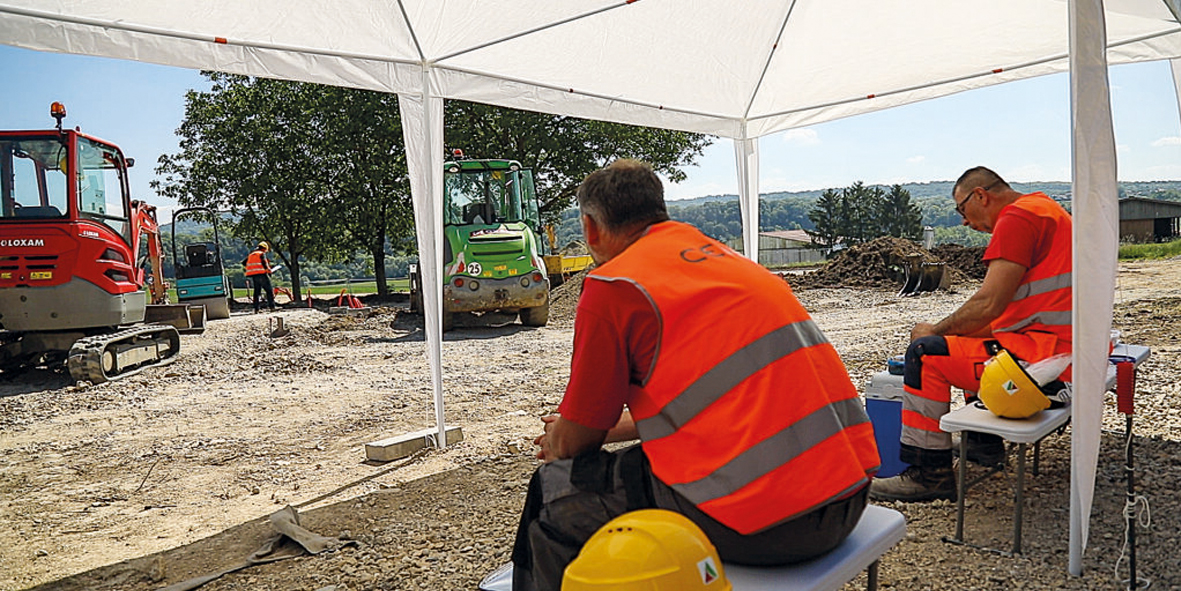
© OPPBTP
Workers Are Now Better Protected by Their Employers Against Heat-Related Risks
As climate change intensifies, the French regulatory framework is evolving. Just before the summer, Decree No. 2025–482 and the Order of 27 May 2025 introduced new provisions aimed at strengthening the protection of workers exposed to extreme heat in the workplace. Starting 1 July 2025, employers will face stricter obligations regarding the management of “episodes of intense heat”.
A legal definition of “episodes of intense heat”
Although the decree does not provide a formal table correlating meteorological conditions with preventive measures — as exists in some other European countries such as Cyprus for example — it defines heat periods according to the “heatwave vigilance” system implemented by Météo France.
This system comprises four alert levels:
Green vigilance: no particular concern;
Yellow vigilance: high temperatures (exposure to intense heat for one or two days that may pose health risks to the population);
Orange vigilance: heatwave (intense, prolonged heat likely to endanger exposed individuals);
Red vigilance: extreme heatwave (exceptional in duration, intensity, and geographical extent, presenting a major health risk).
Accordingly, “episodes of intense heat” correspond to the yellow, orange, or red vigilance levels, while “heatwave periods” refer specifically to the orange and red levels.
New obligations for employers
The decree strengthens employers’ duties to assess risks, adapt working conditions, and implement preventive measures. A new section entitled “Prevention of Risks Related to Episodes of Intense Heat” has been added to the French Labour Code. It requires employers to:
Assess risks associated with worker exposure to intense heat — indoors or outdoors — and include this analysis in the Occupational Risk Assessment Document (DUERP);
Define preventive measures and response procedures in case of risk to workers’ health or safety, including systems for reporting situations of discomfort or distress, which must be communicated to employees and the occupational health and safety department;
Provide sufficient quantities of fresh drinking water close to workstations, especially for outdoor work (at least 3 litres per worker per day);
Adapt preventive measures for workers vulnerable to heat exposure due to age or health conditions;
For companies with fewer than 50 employees, define risk prevention and worker protection measures;
For companies with 50 or more employees, update the annual programme for the prevention of occupational risks and improvement of working conditions (PAPRIPACT), detailing the measures to be implemented in the coming year.
Mandatory implementation of preventive measures
During an episode of intense heat, employers must implement the preventive measures identified. According to the decree, reducing risks related to heat exposure should be based in particular on:
- Using work processes that avoid or limit exposure to heat;
- Modifying the design or layout of workplaces and workstations;
- Adjusting work organisation, especially working hours, to limit exposure duration and intensity and to allow for rest periods;
- Technical measures to reduce solar radiation on exposed surfaces (e.g., shading, insulation) or prevent heat accumulation in premises or at workstations;
- Increasing the supply of drinking water when necessary;
- Selecting suitable work equipment that helps maintain stable body temperature, taking into account the nature of the tasks performed;
- Providing personal protective equipment (PPE) to limit or offset the effects of high temperatures or solar radiation;
- Informing and training workers on appropriate behaviour during heat episodes, and on the correct use of equipment and PPE, to minimize heat exposure as far as technically possible.
It is also worth noting that self-employed workers and subcontractors operating on construction, forestry or arboricultural sites are likewise required to implement these preventive measures.
Heatwaves and eligibility for the weather-related unemployment scheme
Since the Decree of 30 June 2024, heatwaves have been recognized as grounds for temporary unemployment due to adverse weather in the construction sector. In line with this development, the Decree of 27 May 2025 specifies that “heatwave periods” constitute adverse atmospheric conditions within the meaning of Article L.5424-8 of the French Labour Code, thereby entitling workers in the building and public works sectors to compensation for weather-related work stoppages.
See also the EUROGIP report: Working in extreme heat and heatwaves: what legislation and preventive measures at international level? (2023) ●