

March 2026 | Austria | Climate change
© 2014 GolfCphoto | www.shutterstock.com/g/chayatorn
When Work Becomes a Heat Test
New heat protection regulation in Austria marks a milestone in employee protection.
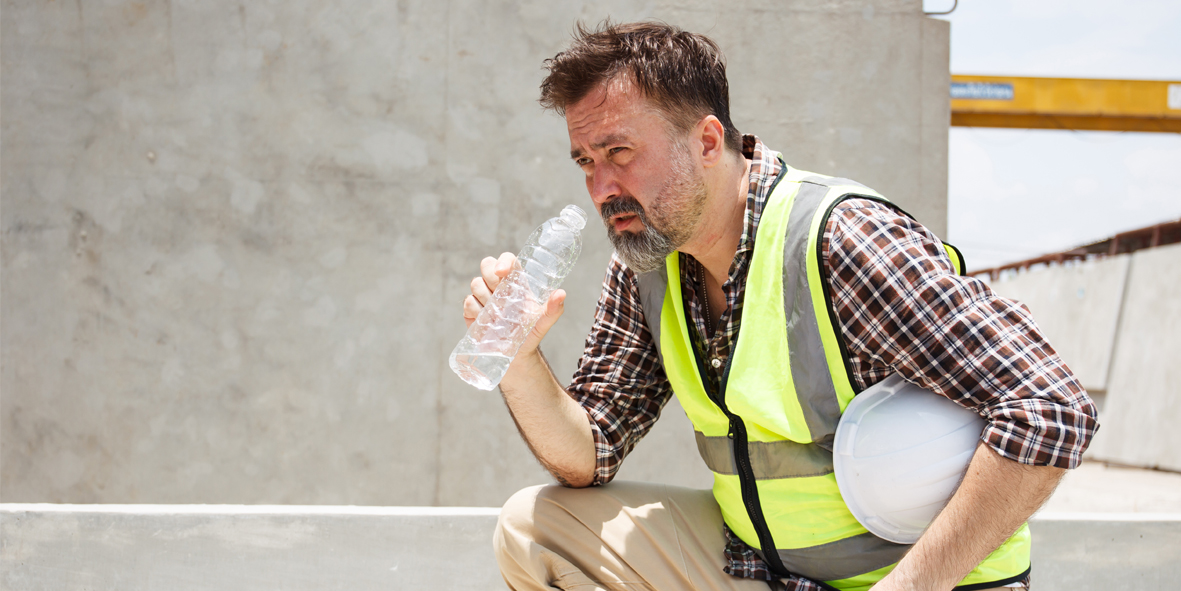
Since January 1, 2026, a new heat protection regulation has been in force in Austria, which for the first time comprehensively obliges employers to systematically protect their employees from the dangers of extreme heat and UV radiation. The regulation is a response to a development that can no longer be ignored: climate change is permanently altering the world of work – and presenting companies and employees alike with new challenges.
Climate change in the workplace: A growing threat
The statistics speak for themselves: the past few years have been the warmest globally since weather records began, and heat waves are increasing in frequency, intensity, and duration. In Austria, temperatures above 35 degrees Celsius were repeatedly recorded in the summers of 2023 and 2024. What may be unpleasant for vacationers becomes a serious health risk for people who have to work outdoors.
Employees in the construction industry, agriculture, horticulture, street cleaning and parcel delivery are particularly affected. However, dangerous conditions can also arise indoors without adequate cooling — for example, in production halls, bakeries, or laundries. The health consequences range from exhaustion, heat cramps, and circulatory problems to life-threatening heat strokes.
The new heat protection regulation: What is changing?
The Austrian Heat Protection Regulation (Hitze-V) now legally obliges employers for the first time to systematically identify and assess the risks to their employees from heat and UV radiation. As soon as GeoSphere Austria issues a heat warning of at least level 2 (yellow), specific protective measures must be implemented.
Key points of the regulation:
- Action plans: Employers must develop a comprehensive protection concept that combines technical, organisational, and personal measures.
- Supply of drinking water: Employees must be provided with sufficient drinking water or another healthy, non-alcoholic beverage, also at external work sites.
- UV protective clothing: Employers must provide clothing with UV protection – at least T-shirts that cover the upper arms and pants that cover the knees.
- Air conditioning in vehicles: Newly purchased self-propelled vehicles on construction sites and in open-cast mines must be equipped with air conditioning systems. A transition period until June 2027 applies to crane cabins.
- Health monitoring: Employees who regularly work outdoors are entitled to occupational health examinations—annually from the age of 45.
Take health risks seriously
The health effects of working in hot conditions are manifold and often underestimated. The first warning signs are heavy sweating, dizziness, headaches or concentration problems. If these are ignored, serious illnesses can result, like:
- heat exhaustion, which manifests itself in weakness, nausea, elevated body temperature and a high pulse rate.
- This is a medical emergency and causes symptoms like: body temperature rises sharply, leading to confusion, impaired consciousness or convulsions.
- skin damage. UV radiation significantly increases the risk of skin cancer.
People who are overweight, those with cardiovascular disease or diabetes, and employees who take certain medications are particularly at risk. A lack of acclimatization — for example, after a long vacation — also significantly increases the risk.
Practical examples: How companies are responding
Many Austrian companies had already taken measures before the regulation came into force. A large construction company in Vienna introduced a comprehensive heat protection programme in 2024: When temperatures exceed 32 degrees Celsius, working hours are moved to the early morning hours, shade tents are set up on construction sites, and additional drinking water stations are installed. Employees are provided with cooling vests and neck towels that can be regularly moistened in water misting zones.
An agricultural business in Styria relies on staggered working hours and a “buddy system”: employees work in pairs and monitor each other for signs of heat stress. During harvest work, regular cooling breaks are scheduled in air-conditioned break rooms.
These examples show that heat protection does not have to be complicated, but it does require systematic thinking and a willingness to rethink established processes.
Not just heat: Other extreme weather risks
While heat is the focus of the new regulation, climate change will bring other extreme weather events that could endanger workers. Heavy rain and flooding have also increased in Austria in recent years.
In August 2024, severe storms in Vienna and Lower Austria caused several construction sites to be flooded. Workers had to be evacuated, excavation pits were filled with water, and heavy equipment was in danger of being washed away. Such events require flexible emergency plans, rapid communication and the willingness to interrupt work at short notice.
For field workers — such as those in energy supply, telecommunications or road maintenance — heavy rainfall events mean an increased risk of accidents due to slippery surfaces, limited visibility, and sudden flooding. Employers are required to actively monitor weather forecasts and warn their employees in good time.
Best Practice: Acclimatization and training
A key element of successful heat protection is acclimatization. The human body can adapt to heat – but this process takes time. A gradual increase in heat exposure over 7 to 14 days is recommended. Newcomers should initially work only 20 percent of their usual working hours in the heat and increase this amount by 20 percent each day.
Training is equally important for everyone involved. Managers must learn to recognize risks and implement measures. Employees should know how to protect themselves – by drinking enough fluids (approx. 200 ml every 15 to 20 minutes), wearing suitable clothing, and recognizing their own warning signs.
Challenges for employers
The implementation of the new regulation poses organisational challenges for many businesses. Shading systems, air conditioning units, UV protective clothing and additional breaks also cost money and require rescheduling. Smaller companies and craft businesses in particular, are feeling the pressure to comply.
But the investment pays off in the long term: healthy employees are more productive, take less time off work, and are more motivated. Companies that take heat protection seriously reduce absences due to illness and lower the risk of accidents. In addition, employee protection is increasingly becoming a competitive advantage in attracting skilled workers.
European context and outlook
Austria is a pioneer in Europe with its heat protection regulation, but other countries are also responding. Spain and Greece, which are traditionally more affected by heat, have had heat protection regulations in place for years. Similar regulations are currently being discussed in Germany.
The EU Commission has announced that it will focus more closely on climate-related health risks in the workplace. Experts expect that uniform minimum standards could be introduced across Europe, similar to those for other occupational safety issues.
Conclusion: Climate adaptation as an ongoing task
The new heat protection regulation is an important step, but only the beginning. Climate change is advancing, and extreme weather events are becoming the new normal. Employers and employees must learn to deal with these conditions – through prevention, flexibility, and mutual mindfulness.
Protection against heat and other extreme weather events is not a chore, but an investment in the health of employees and the future viability of companies. Those who act with foresight today will be better equipped to face the challenges of tomorrow. ●
More information:
AUVA: www.auva.at
GeoSphere Austria (heat warning): www.geosphere.at
Labor Inspectorate: www.arbeitsinspektion.gv.at